
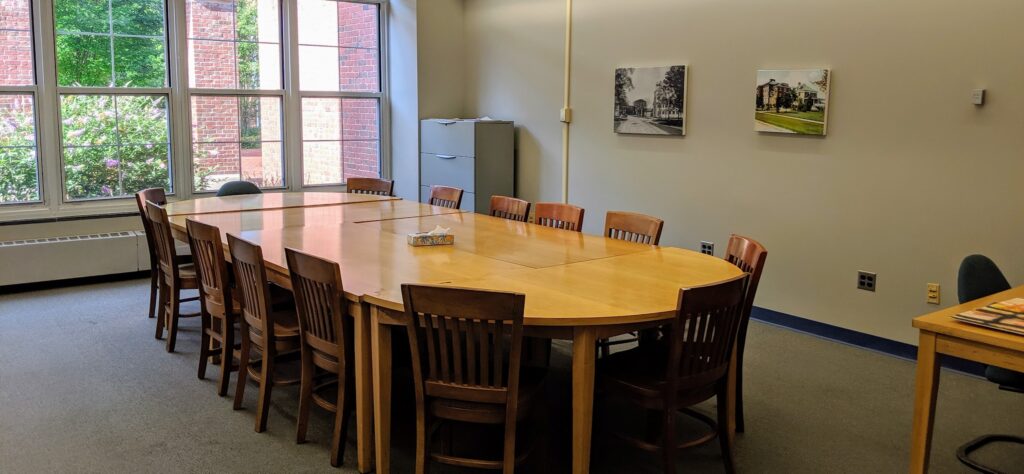
Harkness-based discussion puts students at the center of the learning process based on the belief that “who does the work does the learning.” When students are expected to drive the conversation, they develop initiative, take ownership of their ideas, and engage more deeply with what we are learning. The approach also recognizes that students bring prior knowledge and perspective to the table, making them genuine collaborators rather than passive recipients of the curriculum. Harkness also builds so-called “soft skills” (or “core skills”): intentional listening, confident articulation of their ideas, responding to disagreement, etc., that students carry well beyond the classroom.
As a teacher, I’ve also found that Harkness offers a chance for meaningful collaboration with students that keeps ideas fresh and provides me insights that encourages my own ongoing learning.
Resources for Harkness
- Harkness Fairy Tale aka the “Takooki Mario Story” (Word document)
More coming soon
- Harkness Preparation Sheet. Example: Martin Luther King, Jr.’s “Letter from a Birmingham Jail,” 1963 (Word document)
- Dialectical Notebook
- What is a dialectical notebook and how it was used for this lesson (Word document)
- Martin Luther King, Jr.’s “Beyond Vietnam,” 1967 — slightly modified for classroom use (Word document)
- Dialectical Notebook templated for King’s “Beyond Vietnam” (PDF)
- More coming soon
More coming soon
Where Else to Look
More coming soon.